

FA Football Goal Regulations: The Definitive Guide for Clubs & Schools
Football goals don't come in a wide range of sizes just for fun; some FA football goal regulations govern which goal post size and netting you should be using to be compliant from a professional and safety point of view.
Whether you're running a community sports facility, creating a grassroots project, or setting up a professional football club, these regulations are crucial to ensure the safety of players and spectators alike.
Find out what goal post size you need to comply with FA regulations.
FA Football Goal Regulations – Key Points at a Glance
- FA football goal regulations define exact goal sizes by age group, ranging from 12ft x 6ft for mini-soccer to 24ft x 8ft for U15s and senior football.
- All football goals must meet BS EN safety standards (BS EN 16579 or BS EN 748), covering stability, durability, and entrapment risk.
- Goal netting must use an approved mesh size (maximum 120mm), be fit for purpose, and avoid hazardous fixings such as metal staples.
- The FA’s “No Anchor, No Game” policy requires every goal to be securely anchored and capable of passing the 1,100N horizontal pull test.
- Regular pre-match inspections and ongoing maintenance are essential to remain compliant and ensure player safety at all levels of the game.
Standard Football Goal Sizes by Age Group
| Game Format | Age Group | Recommended Size (ft) | Recommended Size (m) |
| 5v5 (Mini-Football) | Under 7 - Under 8 | 12ft x 6ft | 3.66m x 1.83m |
| 7v7 (Mini-Football) | Under 9 - Under 10 | 12ft x 6ft | 3.66m x 1.83m |
| 9v9 (Youth) | Under 11 - Under 12 | 16ft x 7ft | 4.88m x 2.13m |
| 11v11 (Youth) | Under 13 - Under 14 | 21ft x 7ft | 6.40m x 2.13m |
| 11v11 (Youth/Adult) | Under 15 - Senior | 24ft x 8ft | 7.32m x 2.44m |
In general, goal post sizes correspond to the age group of your players. After all, it makes sense that the smaller your players are, the smaller the goal should be (an under-8 can't be expected to save a goal in a senior-size goal).
For all age groups under 10, a 12ft x 6ft goal is regulation. This is an appropriate size to make goalkeeping realistic for children in these age groups.
For U11S and U12S, a 16ft x 7ft goal is regulation. This increase in height and width corresponds with growing players.
For U13 and U14 youth players, a 21ft x 7ft goal is regulation. This increase in width accounts for the larger number of players on the pitch (11 v 11) and the pitch size itself.
For U15 and Senior players, a 24ft x 8ft goal is regulation. This size accounts for the physical maturity of these players, as well as their increased skill level.
Note: If you're running an informal football facility or fun day, the size of the goal relative to the age group playing is less important. For example, you could use a U10 size goal for U12S if they're particularly small.
Essential Safety Standards: BS EN 16579 & BS EN 748
The evolution of FA goal safety regulations reflects a growing emphasis on player safety and equipment reliability.
Previously, goal standards were less comprehensive, with limited enforcement of manufacturing guidelines. However, modern regulations such as BS EN 16579 and BS EN 748 have introduced more stringent requirements to ensure safety on the pitch.
BS EN 16579 applies to all football goals weighing over 10kg. This standard highlights the importance of secure and stable goal construction, targeting goals used at amateur and grassroots levels. It ensures that they meet specific safety and performance benchmarks, preventing accidents caused by tipping or structural failure.
BS EN 748, on the other hand, focuses on professional-sized goals typically used in competitive matches and training for older age groups, such as seniors and U15 teams. This regulation sets detailed criteria for the durability, stability, and material quality of full-sized goals.
Together, these updated standards have raised the bar for football equipment manufacturers, ensuring that goals are safer and more reliable, regardless of the setting in which they are used.
Key Compliance Points:
- Crush and Shear Points: The safety standards address potential crush or shear points on the goal posts, ensuring that the design minimises risks of injuries caused by moving or detachable parts.
- Hole/Mesh Diameters in Nets: Regulations specify the permissible hole and mesh diameters in goal nets to prevent head and finger entrapment, prioritising player and spectator safety.
- "Finger Test" and "Head Test": Compliance involves rigorous testing procedures, including the "finger test" and "head test", to verify that the equipment does not pose entrapment hazards for users.
FA Regulations for Football Goal Netting
| Feature | FA Regulation & Requirement | Safety & Expert Insight |
| Mesh Size | Must not exceed 120mm. | Prevents head entrapment. Most professional nets use a 100mm mesh for added security. |
| Material Strength | Must be "fit for purpose" based on the level of play. | Professional Grade: High-density 4mm–5mm twine. Grassroots Grade: Standard 2mm–3mm twine. |
| Fixing Methods | Prohibited: Metal "U" staples or sharp fixings. Approved: Plastic net clips, velcro ties, or recessed channels. | Metal staples pose a significant puncture risk to players and damage the goal frames over time. |
| Colour Regulations | Coloured and striped nets are permitted. | Colours must not interfere with the goalkeeper’s vision or the referee’s ability to see the ball cross the line. |
At Huck Nets, if there's one thing we know, it's sports netting. The quality of a goal net directly impacts the safety and experience of players and officials, which is why we offer professional-grade options tailored for every level of play.
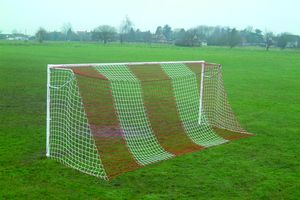
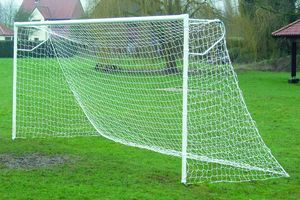
We believe in providing nets that are "fit for purpose." This means the material strength matches the intensity of the game. Our professional-grade nets feature high-density 4mm-5mm twine for heavy use, while our grassroots-grade nets use standard 2mm-3mm twine.
Safety is our priority, especially when it comes to installation. We offer secure fixing methods, including ground pegs, counter weights, and ballast chains, designed to hold the net firmly in place to minimise hazards on the field.
To guarantee reliability, our nets undergo rigorous testing. We perform stress tests to assess impact resistance and UV treatments to ensure they stand up to harsh weather.
Note: We recommend a regular inspection interval of 12 months for all our goal nets to ensure they remain up to standard.
Anchoring & Stability: Preventing Tip-Overs
We touched on anchoring options briefly, but they're an important part of goal regulations and safety, so you need to know what measures should be taken to prevent tip-overs to comply with FA rules.
The FA's "No Anchor, No Game" policy is a critical safety standard designed to ensure the stability of football goals and prevent accidents caused by tip-overs during use. This policy underscores that properly anchored goals are non-negotiable when it comes to player and spectator safety on the field.
To comply with the FA's regulations, goal stability must meet the standard for the 1,100 Newton (110kg) horizontal pull test. This test simulates the force that might be exerted by a player or external factors, ensuring the goal remains securely in place under pressure.
Proper anchoring and regular testing are essential to adhere to this standard and uphold the safety and integrity of the game.
Types of Goal Anchors
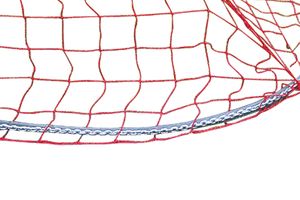
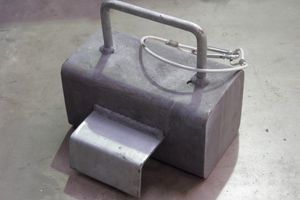
There are 4 main types of goal anchors that are used to secure posts in place. The type of anchor you need depends on your pitch type and goal post style.
- U-Pegs for Grass Pitches
U-Pegs are a simple and effective anchoring solution for grass pitches. They are driven into the ground over the goal's base frame to provide stability. This method is ideal for natural surfaces where the soil is firm enough to hold the pegs securely. - Sandbags/Weights for Hard Surfaces or 3G/4G Pitches
For artificial or hard surfaces where U-Pegs cannot be used, sandbags or purpose-made weights are employed to anchor goals in place. These provide the necessary resistance to prevent any unwanted movement during play. - Internal Counterweights
Some football goals are designed with built-in counterweights in the base frame to ensure stability. This approach eliminates the need for additional anchoring materials, offering a practical, integrated anchorage solution. - Ground Sockets
Ground sockets are a permanent anchoring option commonly used in fixed installations. The sockets are embedded in the ground, allowing the goalposts to be securely slotted in place, ensuring maximum stability and safety.
Browse Football Goal Accessories
Maintenance & Pre-Match Inspections
Once you have the right goal posts and netting, it's important to maintain them and regularly inspect them to ensure they remain safe and functional season after season.
Pre-Game Checklist:
- Check the nets: Make sure the nets are securely attached to the posts before each game. Look for any tears or holes that could be a safety hazard or affect play. Repair or replace any damaged sections.
- Tighten loose bolts: Look over the entire goal structure and tighten any loose bolts or fixings. This prevents the goal from becoming unstable.
- Inspect the frame: Check the goal frame for any bending, cracks, or other damage. A compromised frame is unsafe and should be repaired or replaced immediately.
- Confirm anchoring: Make sure the goals are firmly anchored to the ground. Stable goals are crucial to prevent them from moving or tipping over during a game.
Following this checklist before every game will help keep players safe and your equipment in good condition.
It’s also important to keep your pitch in tip top condition. Check out our Groundskeeper’s guide to football pitch maintenance.
Proper Storage Practices
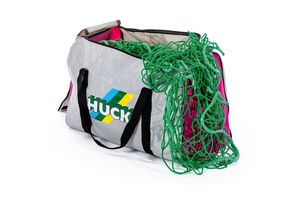
To prevent misuse and extend the life of your equipment, make sure your goals are stored securely when not in use.
If your goal posts aren’t permanently fixed, store them in a safe place, either indoors or locked together in an outdoor area.
This is especially important for public sports facilities to avoid vandalism or improper use.
To make your goal nets last longer, store them indoors between matches. Huck Nets' goal nets are UV-stabilised and weatherproof, but keeping them in a dry place will improve their durability even more.
Use a football net bag for easy storage, but make sure the nets are clean and dry first. Proper storage will help keep your equipment in great condition and ready for future use.
Shop Football Netting Accessories
Ensure Safety & Professional Play With FA Regulation Goals
Complying with FA regulations is key to ensuring safety and professionalism in football, from grassroots to professional leagues.
Following these rules means using high-quality, durable equipment that reduces risk and encourages fair play. Properly regulated goals protect players and create a consistent, professional experience for all.
By sticking to FA guidelines, clubs show they care about player well-being and the integrity of the sport, creating a safe and fun environment for everyone.
Invest in Regulation Goal Netting At Huck Nets
At Huck Nets, we offer a wide range of professional-grade, regulation football goal nets for all levels of play.
Our selection includes durable, biodegradable options for eco-conscious clubs and nets with custom-coloured stripes to match your team's branding.
Whether for a local club or a professional league, our high-quality, FA-standard nets are built for reliability and style, enhancing the game for players and fans.
Shop our range of FA-compliant football goal nets at Huck Nets.
Order Regulation Football Goal Nets
FAQs
Can You Use 24x8ft Goals for U14s?
No, 24x8ft goals are not recommended for U14s as they exceed the FA's size guidelines for this age group. Smaller, age-appropriate goals should be used instead.
What Are the Regulations for 3G/4G Pitches?
3G/4G pitches must meet FIFA and FA quality standards, ensuring proper shock absorption, ball behaviour, and player safety. Only approved, certified pitches are suitable for official matches and training.
Do Goal Posts Have to Be White?
Yes, goal posts must be white according to FA regulations, Law 1, section 10 , ensuring visibility and standardisation across all matches and levels of play.
Why Are Football Goals 24 Feet Wide?
Football goals are 24 feet wide to standardise dimensions internationally, ensuring consistency across all levels of play and accommodating the dynamic nature of the sport.
When Did Goal Posts Change From Square to Round?
The transition from square to round goal posts occurred in the 1980s to improve safety for players and to align with evolving design standards in football equipment.
Read our brief history of football nets for more information.
When Will My Regulation Football Goal Nets Be Delivered?
Dispatch times vary by netting type, but all orders are shipped via next-day courier service for fast delivery. You’ll receive confirmation once your order is dispatched.