
Fall Arrest vs. Debris Netting: Which System Does Your Site Need?
Fall arrest vs. debris netting. Which system does your site need? In construction, the term "safety netting" is often used as a catch-all. However, using the wrong type of net isn't just a compliance issue; it’s a life-safety risk.
To help you keep your site compliant and your insurance valid, we've broken down the technical differences, legal requirements, and when to use each to ensure you stay on the right side of Health and Safety Executive (HSE) standards.
Fall Arrest Vs Debris Netting: Direct Comparison
| Feature | Fall Arrest Netting | Debris Netting |
|---|---|---|
| Primary Purpose | Catching people (Fall protection) | Catching objects (Debris containment) |
| UK Standard | BS EN 1263-1 | No specific load-bearing EN standard |
| Material Strength | High-tensile (e.g., 5mm cord) | Lightweight HDPE mesh |
| Installation | Horizontal (under work area) | Vertical (on scaffolding) or as an overlay |
| Energy Absorption | High (stretches to absorb impact) | Low (designed to contain, not absorb) |
What is Fall Arrest Netting?
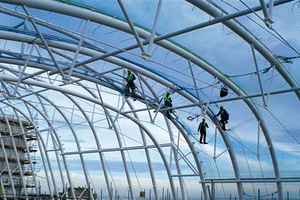
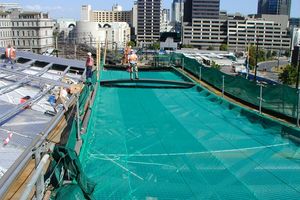
Fall arrest netting is a type of collective fall protection. It's designed to catch a person if they fall and absorb the impact.
Unlike personal fall protection systems that use individual harnesses and lanyards, fall arrest netting protects multiple workers at once.
The netting is made from high-strength materials, like high-tenacity polypropylene, that stretch to absorb the force of a fall, which helps reduce the risk of injury.
It's installed horizontally below a work area, creating a safety barrier that helps sites comply with safety regulations and gives workers peace of mind.
Order EN Compliant Fall Arrest Netting
Key Technical Specs
| Feature | Specification | Key Benefits & Requirements |
|---|---|---|
| Compliance Standard | BS EN 1263-1 | The essential UK/European safety standard for safety netting and its transition to use. |
| Material | High-tenacity knotless polypropylene | Knotless is superior: It is significantly less abrasive to the skin during a fall and provides much higher energy absorption compared to knotted alternatives. |
| Mesh Size (Standard) | 100mm | The industry standard for general fall arrest applications at height. |
| Mesh Size (Small) | 45mm | Mandatory requirement for lower fall heights or in scenarios where personnel may need to walk directly on the net. |
The Benefits of Fall Arrest Netting
Unlike personal fall protection systems such as harnesses, fall arrest nets offer collective protection, safeguarding multiple workers simultaneously.
This approach allows workers the freedom to move and perform tasks without the need to be "tied off" to a fixed point.
By eliminating the restrictions of a harness, nets enable greater efficiency and flexibility on-site while maintaining a high level of safety.
This makes them an ideal choice for work environments where mobility and teamwork are critical.
What is Debris Netting?
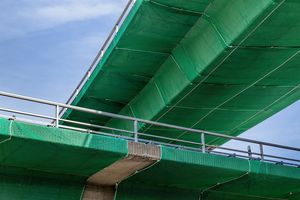
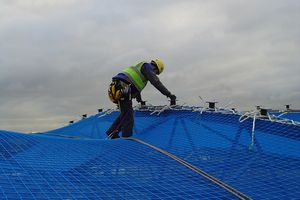
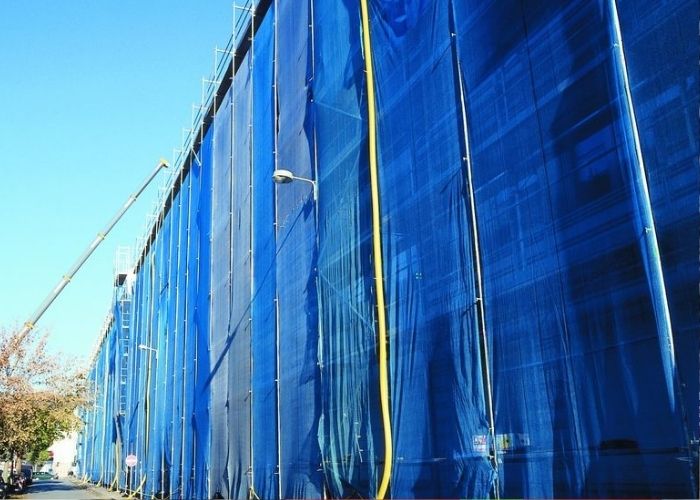
Debris netting is a fine mesh used to catch small tools, bricks, and other construction waste, making job sites safer and cleaner.
It's typically installed around scaffolding or high work areas to stop debris from falling and reduce risks to people below.
The netting's durable material is built to handle outdoor conditions, making it a key safety feature on construction sites, especially in busy urban environments.
Order Close Mesh Debris Netting
Key Technical Specs
| Feature | Specification | Key Benefits & Requirements |
|---|---|---|
| Material | Lightweight HDPE | High-Density Polyethylene is UV-stabilised and chemical-resistant, ensuring the net doesn't degrade or become brittle in harsh outdoor conditions. |
| Design | Micro-mesh Construction | A tight weave (approx. 1/16 inch) creates a barrier that catches fine fragments, dust, and small fixings that would pass through standard safety nets. |
| Mesh Density | Industry Standard (approx. 70gsm - 100gsm) | Standard densities provide a balance of wind permeability (to reduce "sail effect" on scaffolding) and debris containment. |
| Safety Compliance | Non-load Bearing | Unlike Fall Arrest nets, there is no EN load-bearing standard for debris nets. They must be used strictly for containment, not for catching personnel. |
The Benefits of Debris Netting
Debris netting is essential for safety and order on construction and refurbishment sites.
It serves as a protective barrier, protecting both the public and workers on the ground from falling objects like tools, materials, or small fragments. This not only lowers the risk of injury but also helps maintain safety standards on busy worksites.
By stopping debris from damaging nearby property, debris netting also helps avoid expensive repairs and potential liability.
It also helps keep the construction site clean and organised, contributing to a more efficient and professional work environment.
Warning: Debris netting is not designed for fall protection and should never be used to support a person's weight. Doing so can lead to serious injury or death. Always use proper fall protection equipment as required by safety regulations.
Fall Arrest With Debris Overlay: Double Protection Approach
Combining fall arrest and debris netting is a common requirement on many sites. It’s a single solution that keeps both your workers safe and your site clean.
At Huck Nets, we stock fall arrest netting with a debris overlay to meet this need. This product combines both netting types, offering a practical and efficient option for construction and industrial sites.
Our combined netting helps you meet safety regulations while keeping your work environment clean and organised.
The Benefits of Doubling Up
- Saves Lives: The fall arrest netting is designed to protect workers by preventing potentially fatal falls, creating a safer work environment on-site.
- Catches Small Tools and Debris: The debris overlay works in tandem with the fall arrest netting to capture small dropped tools or loose materials, ensuring nothing hazardous falls to lower levels or the ground.
- Prevents the "Sieve" Effect: Traditional fall arrest netting has a 100mm mesh size, which can allow smaller items to slip through. By doubling up with a debris overlay, you eliminate the risk of small debris falling through the gaps.
- Reduces Installation Time: Instead of installing two separate systems, using a combined fall arrest and debris netting setup saves time and effort. This streamlined approach simplifies the installation process, making your work more efficient.
UK Regulations & Compliance
The Work at Height Regulations 2005 exist to keep workers safe.
These regulations follow a hierarchy of control, which prioritises collective safety measures (protecting a group) over individual ones (protecting a single person).
This means using systems like fall arrest or debris netting is preferred because they protect multiple workers at once. Individual equipment, like safety harnesses, should not be the only line of defence.
Employers must assess risks, plan tasks carefully, and put control measures in place to prevent falls. The regulations also state that all equipment must be suitable for the job, well-maintained, and regularly inspected.
By using combined solutions like fall arrest and debris netting, businesses not only comply with these regulations but also create a safer environment for their teams.
Inspection Requirements
Fall arrest nets are subject to strict safety standards and require regular checks to ensure they remain compliant.
Key requirements include:
- Annual UV degradation testing to check durability after sun exposure.
- A "handover certificate" issued upon installation to verify the nets meet regulatory standards.
At Huck Nets, we offer a comprehensive testing and repair service to help your business stay compliant all year. Partner with us to ensure your fall arrest nets perform at their best and keep your teams safe
Learn About Our Safety Net Testing Service
Choosing the Right Safety Netting for Your Site
Use this checklist to determine the appropriate safety netting solution for your site:
| The Risk Factor | The Recommended Solution | Primary Benefit |
|---|---|---|
| A person falling from height | Fall Arrest Netting (BS EN 1263-1) | Provides energy-absorbing "man-safe" collective protection. |
| Falling tools or bricks near a public path | Debris Netting or Scaffolding Mesh | Prevents objects from causing injury to the public or ground staff. |
| Working over a fragile roof | Fall Arrest Netting (Man-safe) | Essential safeguard for workers operating on non-load-bearing surfaces. |
| Both falling personnel and small debris | Fall Arrest Net with Fine-Mesh Overlay | Comprehensive Safety: Catches workers while also trapping small fixings. |
By matching the right solution to your specific risks, you can create a safer work environment while meeting compliance standards.
Conclusion: The Right Safety Netting Saves Lives
Choosing between fall arrest netting and debris netting isn't a case of one being better than the other. It’s about using the right tool for the job. Fall arrest netting protects your workers, while debris netting secures the worksite from falling materials.
Often, you'll need a combination of both to ensure complete safety for everyone on and around the site. To implement the most effective safety measures, a comprehensive site risk assessment.
Stay HSE Compliant With Huck Nets Safety Netting
At Huck Nets, we offer an extensive range of fall arrest and debris netting designed to keep your workers safe and your site compliant with HSE regulations.
Our high-quality netting solutions are manufactured to meet the highest safety standards, ensuring robust protection in the toughest environments. Whether you need to safeguard your team from falls or prevent hazards caused by falling debris, we have the right products to meet your site’s specific needs.
Order your safety netting online today and benefit from fast shipping to keep your project running smoothly and safely.
Browse EN Compliant Safety Netting
FAQs
What is Debris Netting Used For?
What are the Three Types of Fall Arrest Systems?
- Personal fall arrest systems
- Safety net systems
- Guardrail system