
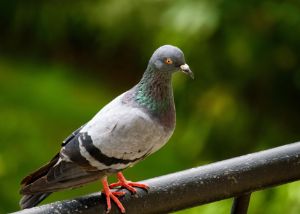
The Ultimate Guide to Bird Protection Netting: Benefits for Gardens, Agriculture, and Commercial Properties
Birds are a vital part of the UK's natural ecosystem, but unmanaged bird activity can quickly become a serious headache.
Whether you are a keen gardener watching an entire cherry harvest vanish overnight, a commercial fruit grower protecting high-value orchards, or a facility manager tackling roosting pigeons on a roof space, the bird protection netting benefits are hard to ignore, as unmonitored birds can cause significant financial loss and structural damage.
Traditional visual or auditory scare tactics often lose their effectiveness quickly as birds adapt. Heavy-duty netting, by contrast, provides an immediate physical barrier that keeps working season after season.
Key Takeaways: What Are the Main Benefits of Bird Protection Netting?
- Complete Harvest Protection: Completely blocks birds from pecking, stripping, or ruining stone fruits, soft berries, and commercial crops.
- Humane & Wildlife-Safe: Creates a non-lethal exclusion zone that deters birds without harm when properly tensioned.
- Prevents Costly Structural Damage: Safeguards masonry, solar panels, and roofs from acidic guano corrosion and blocked gutters.
- Long-Term Durability: Made from UV-stabilised High-Density Polyethylene (HDPE) built to withstand harsh weather for 5 to 10+ years.
- Eco-Friendly & Chemical-Free: Eliminates the need for harmful sprays, sticky repellents, or dangerous traps.
Key Benefits of Bird Protection Netting
Bird netting can provide plenty of benefits for domestic gardens, commercial orchards, or warehouses and other buildings. Here are some of the key benefits that properly installed, quality bird netting can afford you.
1. Maximise Crop Yields & Protect High-Value Fruit


For fruit tree growers, allotments, and commercial orchards, the primary advantage of anti-bird netting is simple: it protects your yield.
When birds peck at ripening fruit, they rarely eat just one; they peck multiple fruits, breaking the skin and leaving open wounds. This invites secondary rot, fungal infections, and swarms of wasps, ruining entire branches of produce.
Installing netting over fruit trees or within fruit cages ensures that soft fruits and stone fruits can reach full maturity undisturbed. Netting is particularly effective for:
-
Top Fruit: Apples, pears, plums, cherries, peaches, figs, and apricots.
-
Soft Fruit & Berries: Strawberries, raspberries, blueberries, blackberries, and redcurrants.
-
Vineyards & Agriculture: Grapes, cereal crops, and brassicas.
2. Humane & Wildlife-Safe Pest Control
With strict wildlife protection legislation across the UK, finding an ethical bird management solution is paramount. Bird protection netting is a 100% humane, non-lethal exclusion method.
Rather than trapping, poisoning, or injuring wildlife, proper netting creates a visible physical boundary that birds simply learn to avoid.
By choosing high-quality netting with appropriate mesh sizes (such as 15mm to 20mm for small garden birds) and keeping the nets taut, you ensure wild birds cannot become entangled or reach the crop beneath.
3. Defence Against Property Damage & Health Hazards
Bird deterrent netting isn't just for gardens; it is one of the most effective pest management tools for commercial and residential properties.
-
Guano Corrosion: Pigeons and gulls produce highly acidic droppings (guano) that eat away at stone masonry, paintwork, roof tiles, and solar panel wiring.
-
Blocked Drainage: Nesting materials like twigs and straw frequently block downpipes, roof valleys, and building HVAC units, causing costly water ingress and flooding.
-
Health and Safety Compliance: Uncontrolled bird droppings create dangerous slippery hazards on walkways and harbour pathogens like Salmonella and E. coli. Netting prevents roosting on ledges, under eaves, and across open courtyards.
4. Unobtrusive Aesthetics & Architectural Integration
A common misconception is that bird netting looks industrial or unsightly. Modern bird protection netting is available in discreet shades, such as black, stone, or translucent mesh, that blend effortlessly against building facades, rooflines, and garden surroundings.
When correctly installed using stainless steel straining wires and turnbuckles, high-quality netting remains virtually invisible from ground level.
5. Long-Term Cost Efficiency & Durability
Cheap, single-use plastic netting from budget stores degrades rapidly under solar exposure, tearing in winter winds and trapping wildlife in loose folds.
By contrast, professional-grade netting manufactured from High-Density Polyethylene (HDPE) is UV-stabilised, knotless, and weatherproof.
It does not absorb water, rot in damp conditions, or lose tensile strength over time. Investing in durable netting provides an immediate return on investment by preventing years of lost crops, structural repairs, and specialised cleaning bills.
Choosing the Right Bird Netting for Your Needs
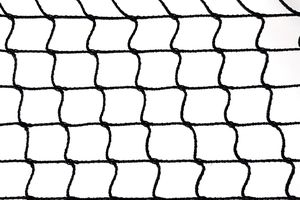
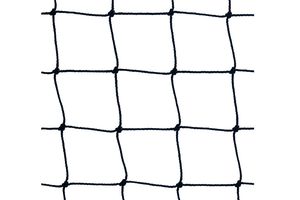

Selecting the correct mesh size is crucial. If the mesh is too large, smaller birds can slip through; if it is improperly suited to the application, it won't offer long-term protection.
| Application / Target Area | Recommended Mesh Size | Key Features & Material |
|---|---|---|
| Small Garden Birds / Sparrows | 19mm (¾") | Lightweight, knotless polyethylene mesh |
| Starlings / Thrushes / Orchards | 28mm (1 ⅛") | UV-stabilised HDPE, flexible drape |
| Pigeons / Balconies / Rooftops | 50mm (2") | Heavy-duty, high-tenacity polyethylene |
| Gulls / Industrial Buildings | 75mm (3") | Weatherproof, wire-reinforced heavy gauge |
-
Measure & Plan Coverage Area: Allow 10-15% extra for overlap and fixings. Accurately measure the height, width, and depth of the fruit tree, crop bed, or building area you need to enclose. Add an extra 10–15% to your dimensions to allow for tensioning, seams, and ground pegging.
-
Construct a Rigid Support Frame: Never drape netting directly onto bare fruit foliage. For fruit trees and garden beds, set up support poles, hoops, or timber fruit cage frames. Suspending the netting away from the foliage prevents fruit from pushing against the mesh where birds can reach it. For structural installations, fit stainless steel perimeter straining wires.
-
Unroll & Position the Netting: Check for twists before securing. Unroll the netting smoothly over the framework or area. Ensure the mesh pattern is aligned evenly without over-stretching or twisting.
-
Tension & Fasten Securely: Maintain a taut, drum-like finish for maximum safety. Attach the netting to your frame or wire system using outdoor cable ties, netting clips, or hog rings. For fruit trees and bushes, pin the bottom edges firmly to the soil with ground pegs so birds cannot hop underneath.
-
Inspect & Maintain Periodically: Check the netting seasonally for loose fixings, accumulated fallen leaves, or wear. Keeping the net taut prevents sagging and ensures complete bird safety year-round.
Why Choose Huck Nets for Bird Netting?
At Huck Nets, we have been manufacturing high-quality netting solutions for over 50 years.
-
Made-to-Measure Netting: We supply custom-cut and pre-cut knotless netting tailored precisely to your dimensions, from small allotment fruit cages to large-scale commercial agricultural enclosures.
-
Superior UK Manufacturing: Our High-Density Polyethylene (HDPE) netting is UV-stabilised, highly durable, and built to withstand the toughest UK weather conditions.
-
Complete System Supplies: From bird netting fixings and tools to straining wires, posts, and clips, we provide everything required for a professional, long-lasting installation.
Explore our full range of bird protection netting and deterrent solutions online today, or contact our team of experts for more information.
Order Quality Bird Netting Solutions
FAQs
Will bird netting block sunlight or pollinators from my fruit trees?
No. Standard bird protection netting allows over 90–95% of natural sunlight, rain, and airflow to reach your plants.
However, if your fruit trees rely on insect pollination (such as bees), ensure netting is lifted or opened briefly during peak blossom time before fruits set.
How do I stop birds or wildlife from getting caught in garden netting?
To ensure complete safety for birds and small mammals, always choose UV-stabilised, high-visibility netting with small mesh sizes (19mm to 28mm). Keep the netting pulled tight like a trampoline across a rigid support frame and secure the bottom edges firmly to the ground so wildlife cannot wander underneath.
How long does professional-grade bird netting last?
High-quality UV-stabilised HDPE bird netting typically lasts between 5 to 10+ years, even when exposed to continuous sunlight, frost, and wind.
Can bird netting be used to protect rooftop solar panels?
Yes. Installing high-density bird netting or solar panel perimeter mesh around rooftop solar arrays is one of the most effective ways to prevent pigeons from nesting, damaging wiring, and building up debris underneath the panels.